
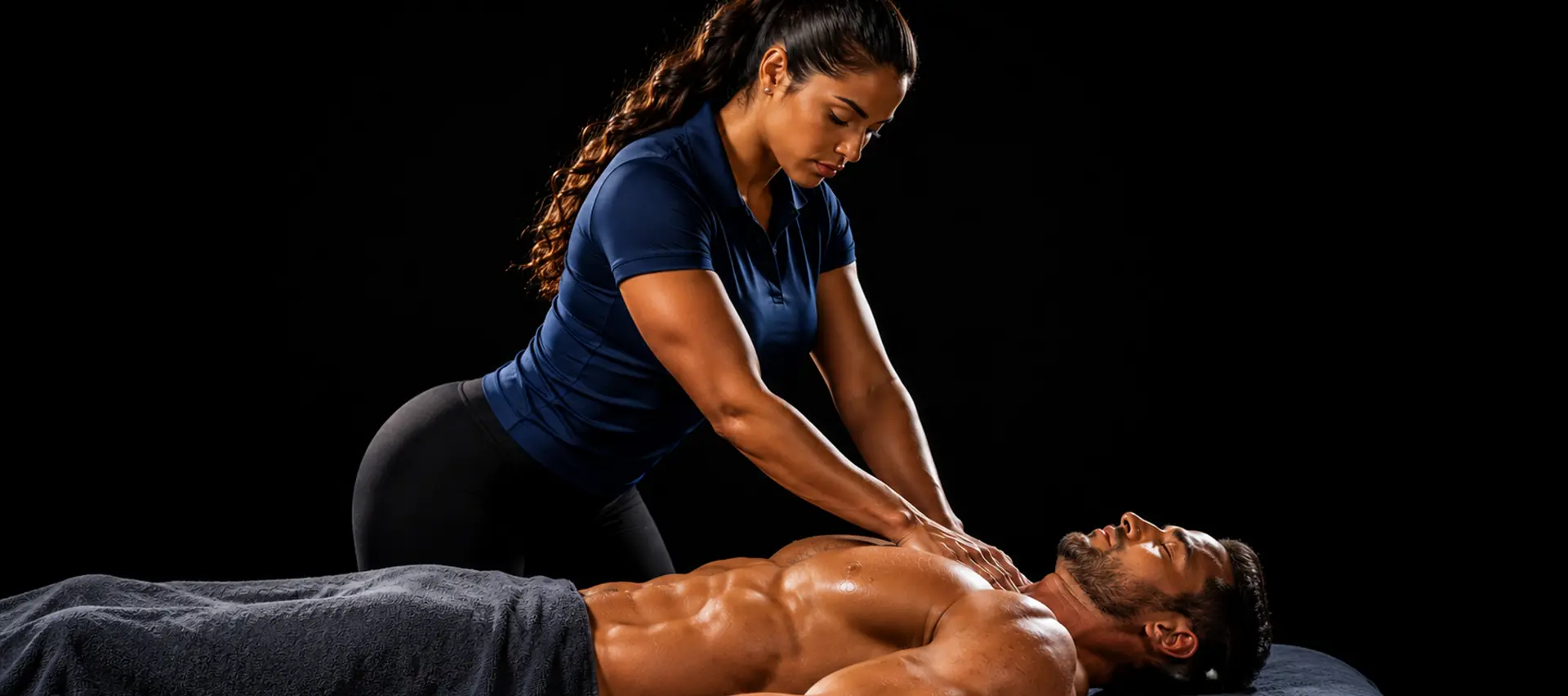
Recover between heavy sessions, protect your joints, and add depth and range to your lifts. Sports massage built for lifters.
Licensed therapists · Midtown East · Open 7 days · Sessions from $169 · FSA/HSA eligible for medical massage with a doctor's referral
Whether you are a beginner learning the ropes of weightlifting or a seasoned pro chasing strength and aesthetic gains, recovery is just as important as training. At Elite Healers Sports Massage, we specialize in helping lifters like you maximize performance, reduce injury risk, and achieve your goals through expert sports massage therapy.

Why Strength Trainers and Bodybuilders Need Sports Massage
Optimal recovery for better gains. Strength training causes micro-tears in muscle fibers that need to recover to grow stronger. Sports massage improves circulation, reduces soreness, and accelerates recovery between workouts, ensuring you are ready to hit the gym harder.
Benefits include:
- Faster recovery between training sessions.
- Reduction in delayed-onset muscle soreness (DOMS).
- Enhanced flexibility and mobility, with improved range of motion.
- Greater ease in building strength and making aesthetic gains.
Injury Prevention from Strength Training
Heavy lifting can take a toll on your body, leading to overuse injuries, muscle imbalances, and joint pain. Sports massage addresses these issues by improving soft tissue health, releasing tension, and keeping your body in peak condition.
Common injuries we help prevent:
- Tendinitis (elbows, knees).
- Lower back pain.
- Muscle strains and tears.
- Shoulder impingements.
Whether you are chasing aesthetic perfection or breaking personal records, sports massage gives you the edge. By enhancing neuromuscular efficiency, improving range of motion, and promoting symmetry, you will see measurable improvements in compound lifts like squats, deadlifts, and presses.
Ready to Elevate Your Lifting?

How Massage Improves Your Compound Movements
Strength training places significant demands on your muscles, joints, and connective tissues. Without proper recovery, even the most dedicated lifters can face setbacks like injuries, plateaus, and limited mobility. Sports massage is a proven tool to enhance recovery, prevent injuries, and optimize performance at every level, from beginners to elite athletes.
Squat depth - Limited hip flexor and adductor length forces the pelvis into anterior tilt at the bottom of the squat. This is a direct pathway to lumbar compression and lost depth. We release the hip complex to restore the range your squat mechanics require.
Deadlift mechanics - Chronically shortened thoracic paraspinals and lats restrict the neutral spine position needed for safe deadlift setup. We decompress the posterior chain and restore thoracic extension so you can maintain position through the full pull.
Bench press - A tight pec minor anteriorly tilts the scapula, reducing subacromial space on every rep. We address the pec minor and anterior shoulder directly, protecting the rotator cuff and restoring the pressing mechanics that heavy bench volume gradually erodes.
Overhead press - Restricted thoracic extension and tight lats limit the shoulder's ability to reach true overhead position, forcing lumbar hyperextension to compensate. We restore the lat and thoracic mobility that overhead work demands.
The Role of Sports Massage in Strength Training Progression
For Beginners: Laying the Groundwork
Starting out in weightlifting can bring soreness and stiffness as your body adjusts to new stress. Sports massage helps by:
- Improving flexibility: Loosening tight muscles ensures better form for lifts like squats and presses.
- Correcting imbalances: Early intervention prevents asymmetries from becoming long-term issues.
- Improved range of motion: Move efficiently to make movement easier.
- Reducing soreness: Quicker recovery encourages training consistency.
Beginners benefit most from restoration techniques and gentle myofascial work to support adaptation.
For Intermediate Lifters: Breaking Plateaus
Intermediate lifters often encounter plateaus in strength or muscle growth. Sports massage helps by:
- Enhancing recovery: Deep tissue work prepares muscles for increased intensity.
- Targeting chronic tightness: Overuse in areas like the shoulders or hamstrings is alleviated.
- Boosting mobility: Greater range of motion improves performance in key lifts.
At this level, therapists incorporate techniques like myofascial release, trigger point therapy, and active stretching to keep lifters progressing.
For Advanced Lifters and Bodybuilders: Peak Performance
Advanced lifters require tailored recovery strategies to sustain their performance. Sports massage helps by:
- Supporting aesthetics: Enhanced muscle tone and symmetry are critical for competitors.
- Preventing overuse injuries: Heavy lifting strains joints and tissues; massage ensures resilience.
- Optimizing readiness: Sports massage reduces tension and fine-tunes movement patterns, allowing you to move better and push further.
At this level, athletes use sports massage to maintain peak performance when lifting.

Why Choose Elite Healers Sports Massage?
- Expertise in strength training recovery: Our therapists are trained in a proprietary protocol developed specifically for strength athletes, not a generic sports massage applied to lifters. We understand progressive overload, training splits, peaking cycles, and the specific tissue demands of compound barbell training.
- Custom recovery plans: Every session is built around your current training phase, not a standard template.
- Comprehensive support: We do not just treat your muscles. We educate you on how recovery, mobility, and injury prevention work together to maximize your results.
Don't Wait to Feel the Difference
Trusted by NYC's competitive powerlifters, CrossFit athletes, and serious gym-goers.
Over 200 reviews at a 4.9 star average. Open 7 days in Midtown East.
How Sports Massage Enhances Compound Lifts
Compound exercises like squats, deadlifts, and bench presses rely on your muscles working in harmony. Tight or restricted muscles disrupt your kinetic chain, leading to compensations that lower performance and increase injury risk.
Key benefits for compound movements:
- Improved hip mobility for deeper squats.
- Increased shoulder flexibility for better overhead presses.
- Enhanced posterior chain activation for more powerful deadlifts.
- With regular massage, you will unlock smoother, more efficient movement patterns that translate directly into better lifts.
Frequently Asked Questions About Sports Massage for Lifters in NYC
How Often Should Weightlifters and Bodybuilders Get a Sports Massage?
It depends on your training volume, programming phase, and recovery needs. Recreational lifters training 3 to 5 days a week typically do well with a session every 3 to 4 weeks. Powerlifters in meet prep or bodybuilders in show prep benefit from weekly or bi-weekly sessions during peak intensification phases. CrossFit athletes training 5 to 6 days a week often need a session every 1 to 2 weeks to manage cumulative load. Lifters working through a chronic issue like shoulder impingement or tendinopathy may need 1 to 2 sessions per week for 4 to 8 weeks before transitioning to maintenance.
Will Sports Massage Hurt My Training or Performance?
Not when timed correctly. Avoid scheduling deep tissue work in the 48 hours before a max-effort session, a competition, or a heavy testing day, since the work can leave you temporarily flat. Schedule deeper sessions on a deload day, the day after your hardest training day, or 3 or more days out from a max attempt. Lighter sessions can be done closer to training. Your therapist will adjust pressure and technique based on what you have on the calendar.
Can Sports Massage Help With Shoulder Impingement, Tennis Elbow, or Other Lifting Injuries?
Yes. Shoulder impingement, rotator cuff strain, medial and lateral epicondylitis, patellar tendinopathy, and lower back tightness from heavy squats and deadlifts are among the most common conditions we treat in lifters. Our therapists target the specific muscular and fascial structures driving each condition. For best results, combine massage with appropriate programming adjustments, mobility work, and physical therapy when relevant.
What Is the Difference Between Sports Massage and Deep Tissue Massage for Lifters?
Sports massage is built around your training cycle and the specific demands of your sport. It combines deep tissue work, myofascial release, trigger point therapy, and active stretching, applied based on what your body needs that day. Deep tissue massage is one technique within that toolkit. For most lifters, a sports massage is the better choice because it is tailored to your training, your specific issues, and your recovery timeline rather than just applying firm pressure across the body.
Should Bodybuilders Get a Massage During Contest Prep?
Yes, and the timing matters. During the back end of contest prep, weekly sessions support recovery between high-volume training days, manage the cumulative tension of caloric restriction, and address muscle imbalances that affect symmetry on stage. Avoid deep tissue work in the final week before a show and focus on lighter restorative work to maintain muscle quality without disrupting peaking.
Do You Accept FSA or HSA for Lifting-Related Massage Treatment?
Yes, when the treatment is for a documented orthopedic condition. Shoulder impingement, rotator cuff strain, tendinopathy in the elbows or knees, chronic lower back pain, and other musculoskeletal conditions related to lifting often qualify. You will need a doctor's referral specifying medical massage and a Visa or Mastercard benefit card. General training recovery and performance work do not qualify.
Where Is Elite Healers Sports Massage Located?
We are at 120 East 56th Street, Suite 420, in Midtown Manhattan. Convenient for lifters training at gyms across Midtown, the East Side, the Upper East Side, and the broader Manhattan area. Open 7 days with morning, midday, and evening availability.
Elevate Your Performance with Sports Massage Therapy Excellence
Ready to Train Harder and Recover Faster?
Whether you are prepping for a powerlifting meet, building toward a bodybuilding show, training six days a week in CrossFit, or just trying to keep your training consistent through a heavy programming block, the next session is the one that moves you forward. Same-week availability across our team. FSA and HSA accepted for medical massage with a doctor's referral.
Book your strength recovery session at 120 East 56th Street, Suite 420, Midtown Manhattan. Open 7 days. Convenient for lifters training at gyms across Midtown, the East Side, and the Upper East Side.
Reserve My Recovery SessionBooking takes under 60 seconds. Cancel or reschedule up to 24 hours in advance.
If you are not sure whether sports massage is the right next step for your specific training situation, call us at (929) 327-8126 and we will give you an honest assessment.