
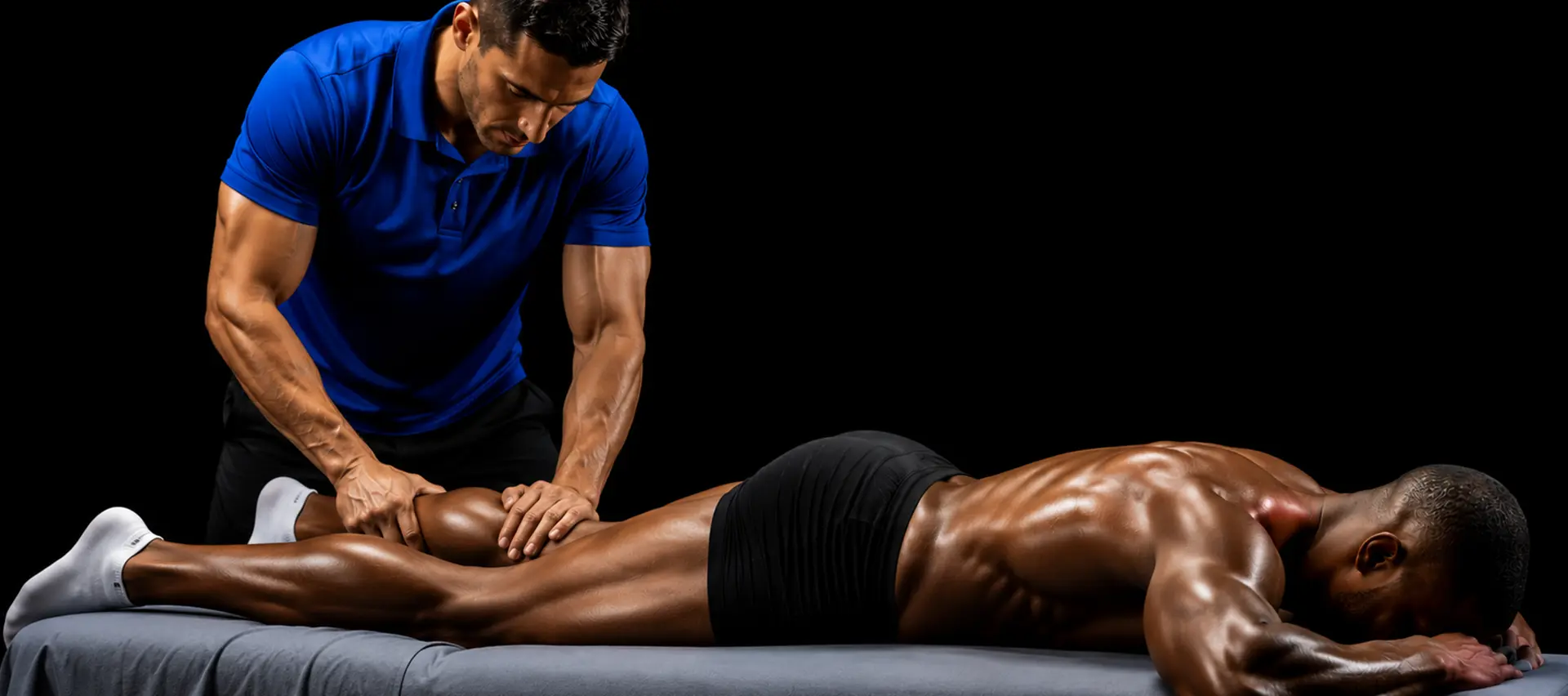
Recover faster between matches and stay on the field.
Licensed therapists · Midtown East · Open 7 days · Sessions from $169
Sports massage for soccer players has one job: keep you on the field. Soccer asks your hamstrings, groin, quads, and calves to sprint, cut, kick, and decelerate for 90 minutes, then do it again a few days later. Our licensed therapists assess how that load is sitting in your tissue, then work the restrictions that slow your recovery and raise your injury risk.
This is not spa massage. Spa massage works the surface for an hour. Sports massage in NYC at Elite Healers works the tissue, the fascia, and the imbalance underneath the symptom, so the result holds after you leave the room.
TLDR
- Who it is for: NYC soccer players in adult leagues, club and college programs, and pickup players returning to the field.
- What we address: hamstring, groin, quad, calf, and hip tightness from sprinting, cutting, and kicking.
- Timing: recovery sessions the same day or within 2 days after a match. Deep work no closer than 72 hours before a big game.
- Formats: 60, 90, and 120 minute sessions, starting at $169.
- Location: 120 East 56th Street, Suite 420, New York, NY 10022. Open 7 days.
Is Sports Massage for Soccer Players Right for You?
This service is built for players who train and compete on a schedule. That includes adult league players at Randall's Island, Chelsea Piers, and Pier 40, club and college athletes home in the city, and former players getting back into weekly matches. It also fits coaches and referees who log serious miles on game days.
It is not the right first step for a fresh, acute injury. If you felt a pop, cannot bear weight, or have significant swelling, see a physician or physical therapist first. Once you are cleared, we can work alongside your rehab.
Why NYC Soccer Players Book Sports Massage
Soccer loads the body in bursts. Sprints, sudden stops, and hard changes of direction stack tension into the same tissues every week. Here is what regular sports massage can do for your game.
Reduce Hamstring, Groin, and Calf Strain Risk
Hamstring strains, groin pulls, and calf strains are among the most common soft tissue injuries in soccer. Tight, imbalanced tissue is more likely to strain under a sprint or a stretch for the ball. Targeted work improves tissue pliability and eases the imbalances that put those muscles at risk.
Improved Flexibility and Range of Motion for Kicking and Cutting
Your kicking leg, hips, and ankles need range to generate power and stay out of trouble. Myofascial release and trigger point work can lengthen shortened tissue and restore the hip and ankle mobility you need to strike the ball and change direction cleanly.
Recover Faster Between Matches
Post-match sports massage can reduce the soreness and stiffness that peak 24 to 48 hours after a game. Better circulation to overworked muscles helps many players feel ready for training sooner.
Prepare Your Body for Match Day
A light, stimulating pre-event session warms tissue and sharpens the connection between your nervous system and your muscles. It complements your warm-up. It does not replace it.
Reset Mentally Before and After Competition
A recent study of elite soccer players found that a short pre-match sports massage lowered pre-competition anxiety. After a hard match, a calmer nervous system also makes it easier to sleep, and sleep is where most of your recovery happens.
The Muscles Soccer Loads Most and How We Address Them
Soccer runs on the lower body and the core. Each sprint, jump, and kick depends on these muscle groups working in sequence. When one falls behind, the others compensate, and that is where strains start

-
Glutes and Hip Flexors
Your glutes drive sprinting and hip extension. Your hip flexors swing the leg through every kick. When the hip flexors shorten and the glutes stop firing well, the hamstrings and lower back pick up the slack. We release the front of the hip and restore glute function so power comes from the right place. -
Adductors and Groin
Your inner thigh muscles stabilize every cut and every pass with the inside of the foot. Adductor tightness is one of the most common complaints we see in soccer players. Releasing it can ease groin strain and restore side-to-side movement. -
Hamstrings
The hamstrings decelerate the leg at the end of every sprint and kick. That is when they are most vulnerable. Hamstring work focuses on the attachments at the sit bone and behind the knee, where soccer players tend to lock up.
-
Quadriceps and Knee
Your quads produce kicking power and control the knee on every landing. Overloaded quads pull on the kneecap and can drive pain at the front of the knee. Releasing the quads and the tissue along the outside of the thigh reduces that stress without working directly on an irritated joint. -
Calves, Ankles, and Feet
Your calves and feet absorb every step on turf and grass. Tight calves limit ankle mobility, which shifts load up to the knee and hip. Calf, Achilles, and foot work can restore ankle range and ease the cramping many players feel late in a match. -
Core and Lower Back
Your core transfers power from your legs to the ball and keeps you stable through contact. When the hips are tight, the lower back often takes the load. Addressing both keeps your mechanics clean.


Common Soccer Injuries We Help Players Recover From
Massage supports recovery. It does not replace medical care. For any significant injury, get evaluated by a physician or physical therapist first. Once you are cleared, sports massage can work alongside your rehab to restore tissue quality and range of motion.
Hamstring Strains
Hamstring strains happen at top speed, usually late in a sprint. Once the acute phase has passed, massage can help reduce adhesions around the healing fibers, restore muscle length, and ease the compensation that builds up in the glutes and lower back.
Groin Pulls
Groin pulls come from lateral cuts and long reaches for the ball. Releasing the adductors and hip flexors can restore lateral movement and reduce the chance of straining the same area again.
Ankle Sprains
After a sprain, the calf, shin, and foot tighten to guard the joint. Once swelling has settled, work on the surrounding tissue can help restore ankle mobility and support your return to cutting.
Calf Strains and Cramping
Calf tightness and late-match cramping are common in players who log heavy minutes. Regular calf work improves circulation to the lower leg and eases the tension that sets up a strain.
Knee Pain and ACL Rehab Support
We do not work on ligament injuries directly. What we can do is address the quads, hamstrings, calves, and hips that control the knee, easing the compensation patterns that build up during rehab. We schedule around your physical therapy. We do not replace it.
Some cases need more than a sports-focused session. If you are managing an injury or a problem that keeps coming back, our medical massage for injury recovery takes a more clinical, treatment-plan approach.
Sports Massage Techniques We Use for Soccer Players
Assessment comes first in every session. We choose techniques based on what your body shows us that day, not a fixed routine.
Deep Tissue Massage
Deep tissue massage in NYC works through the surface layers to break up adhesions in the deeper muscles of the hips and thighs. It is best scheduled away from match days.
Myofascial Release and Trigger Point Therapy
Myofascial release therapy targets the fascia that binds tight muscle groups together. Trigger point work releases the knots that refer pain and limit movement.
Cupping Therapy
Cupping therapy in NYC lifts tissue instead of compressing it. It works well on dense hamstrings, quads, and calves.
Assisted Stretching
Assisted stretching in NYC restores hip, hamstring, and groin range after the tissue has been released.
Pre-Event and Post-Match Sports Massage
Pre-event work is short, fast, and stimulating. Post-match work is slower and focuses on the muscles you loaded hardest. Your therapist matches the style to where you are in your week.
Adam Cardona LMT also applies instrument-assisted soft tissue mobilization (IASTM) within his sessions when it will improve results. Red light therapy is available on request, or when your therapist determines it will enhance your results.
When to Book: Sports Massage Through the Soccer Season
Frequency is driven by how much load your tissue is carrying, not the calendar. This is how we typically schedule soccer players.
Off Season
A general deep tissue session every few weeks to clear accumulated tension. It does not need to be sport-specific.
Preseason
Every 2 to 4 weeks as training volume climbs, unless an imbalance shows up sooner.
In Season
Once a week for recovery. Book within 48 hours after a match.
Match Week
Land your last full session more than 72 hours before a big game so your tissue has time to settle.
Repair Mode
If a strain or imbalance appears, once or twice a week for a few weeks, then back to your standing schedule.
For a full breakdown by goal, read our guide on how often you should get a massage .
What to Expect at Your First Soccer Sports Massage
Your session starts with a short intake: your position, your training and match schedule, and where you feel tight or restricted. Your therapist evaluates movement and tissue, works the areas driving your symptoms, and closes with a recommendation for timing your next session around your matches.
Sessions run 60, 90, or 120 minutes and start at $169. Many players book 60 minutes for in-season recovery and 90 minutes when they need full lower-body work plus a problem area. See sports massage pricing and session rates for full details.
Wear comfortable clothing you can move in. If you are coming in the day after a match, tell your therapist so pressure is matched to your tissue.
Why Soccer Players Choose Elite Healers Sports Massage
Elite Healers is a clinical sports massage practice in Midtown East, Manhattan. Our licensed massage therapists are trained in myofascial release and cupping therapy and work with athletes across running, basketball, tennis, and strength sports.
Over 200 reviews at a 4.9 star average. Featured in Forbes, Muscle and Fitness, Runner's World, Newsweek, and Peloton. See our press and media features.
We are open 7 days a week at our Midtown East sports massage studio, a few blocks from the 59th Street-Lexington Avenue subway station.
BOOK MY FIRST SESSIONSports Massage for Soccer Players FAQs
Should soccer players get a massage before or after a game?
Both have a place, but they serve different goals. A pre-event massage is short, light, and stimulating, and it complements your warm-up. A post-match massage is where most recovery happens: it reduces soreness and restores range of motion in the muscles you just loaded. For in-clinic sessions, most soccer players get the most value from post-match recovery work.
How soon after a match should I book a recovery massage?
Book within 48 hours of the final whistle. The same day or the day after is ideal, before soreness fully sets in. The session focuses on the muscles you worked hardest, usually the hamstrings, groin, quads, and calves.
How close to a big game can I get a deep sports massage?
Keep deep work more than 72 hours before a big match. Deeper pressure can leave tissue sore for 24 to 48 hours, and you want that fully resolved by kickoff. Inside that window, stick to light work or skip the session.
How often should soccer players get a sports massage?
In season, once a week works for most players. Preseason, every 2 to 4 weeks. Off season, every few weeks. If a strain or imbalance appears, a short block of one or two sessions a week helps get you back on track. Our massage frequency guide covers every scenario in detail.
Can sports massage help a hamstring strain?
Yes, as part of your recovery once the acute phase has passed and a physician or physical therapist has cleared you. Massage can help restore tissue length, reduce adhesions around the healing area, and ease the compensation that builds up in the glutes and lower back. It supports your rehab. It does not replace it.
Which session length is best for soccer players?
60 minutes covers targeted in-season recovery for the legs and hips. 90 minutes allows full lower-body work plus a problem area like the lower back. 120 minutes suits players in a heavy training block, or anyone who wants full-body work combined with assisted stretching. Sessions start at $169.
Do I need to play competitively to book a soccer sports massage?
No. We work with adult league players, weekend pickup players, and players returning after time off. If soccer is loading your body, sports massage can help you recover and keep playing.
Will a sports massage make my legs feel heavy for my next match?
Soreness for 24 to 48 hours after deeper work is normal, which is why timing matters. Hydrate, move gently, and hold off on hard training the day after. Scheduled correctly around your matches, the goal is legs that feel looser by game day, not heavier.
Book Your Soccer Sports Massage in Midtown Manhattan
Do not let tight hamstrings or a nagging groin decide how much you play this season. Book a session with our licensed therapists and build recovery into your week the same way you build in training.
Elite Healers Sports Massage, 120 East 56th Street, Suite 420, New York, NY 10022. Phone: (929) 327-8126. Email: info@elitehealerssportsmassage.com. Open 7 days.