
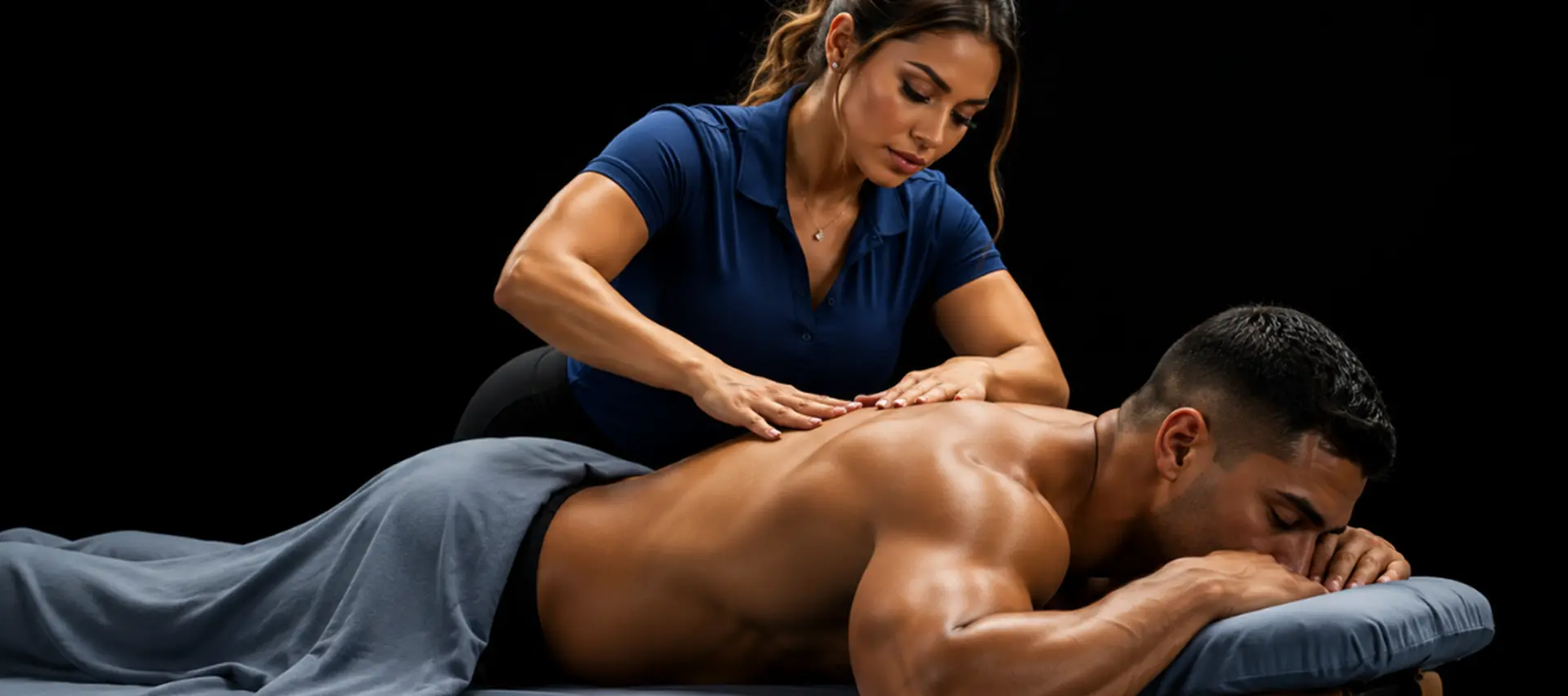
Recover between games. Stay on the field all season.
Licensed therapists · Midtown East · Open 7 days · Sessions from $169
Book My Football SessionSports massage for football players at Elite Healers is built for athletes who sprint, cut, block, and take contact every week and need their body ready for the next snap. Every session starts with an assessment of your position, workload, and injury history, then targets the tissue carrying the most load.
Spa massage works the surface for an hour. Sports massage works the tissue, the fascia, and the imbalance underneath the symptom, so the result holds after you leave the room. That is the difference you feel on the field.
Whether you are grinding through a fall season, returning from a hamstring strain, or preparing for a combine or tryout, our licensed therapists build the plan around your schedule. We are open 7 days a week in Midtown Manhattan.
Why NYC Football Players Choose Elite Healers?
Elite Healers is a clinical sports massage practice at 120 East 56th Street in Midtown Manhattan. Our therapists work with athletes in contact sports, endurance sports, and strength sports. Every therapist is trained in the same proprietary sport-specific system, so your session is built for football, not copied from another client's plan.
We hold over 200 reviews at a 4.9 star average, and our work has been featured in Forbes, Muscle and Fitness, Runner's World, Newsweek, and Peloton. You can meet the licensed massage therapists on our team before you book.

Is Sports Massage for Football Right for You?
This service is a strong fit if you play college, semi-pro, adult league, or flag football, or you are training for a combine, tryout, or return to the field. It is also a fit if recurring hamstring, hip, shoulder, or low back tightness shows up after practice and lingers into the next week.
It is not the right first step for an acute injury, a suspected fracture, a concussion, or numbness or weakness that has not been evaluated. See a physician first. Once you are cleared, we build massage into your return-to-play plan.
Benefits of Sports Massage for Football Players
Sports massage is a recovery tool you plug into your training week. When sessions are timed to your schedule, most football players notice these benefits:
- Faster recovery between games. Improved circulation and reduced tissue tension can shorten the soreness window after practice and contact, so you return to full training sooner.
- Lower strain risk in high-load areas. Managing tight, overworked hamstrings, groin, calves, and hip flexors can reduce the risk of the minor pulls that cost playing time.
- Support during return to play. Once your medical team clears you, massage can ease protective tightness around a healing hamstring, knee, or shoulder and improve comfort as you progress.
- Better mobility in pads. Restoring range of motion through the hips, upper back, and shoulders helps you move freely in gear and hold cleaner technique.
- A nervous system reset. Dedicated recovery time can lower stress and improve sleep, which supports tissue repair between game days.

Common Football Injuries and Tightness We Work On
Football loads the body in predictable patterns. We match each session to your position and to the tissue taking the most stress.

Hamstring
Hamstring strains are one of the most common soft tissue injuries in football, driven by high-speed sprinting and hard deceleration. The biceps femoris takes the most load and is the most likely to re-strain when the tissue is not fully restored. We work the hamstrings, glutes, and adductors to restore length and balance. For an existing strain, we begin only after the acute phase has settled and your provider has cleared you.
Quads, Groin, and Hip Flexors
Explosive starts, sharp cuts, and kicking overload the quadriceps, adductors, and hip flexors. Tightness here pulls on the pelvis and the knee. We release that restriction to restore stride length and cutting mechanics.
Shoulders and Rotator Cuff
Quarterbacks, receivers, and linemen load the shoulder through throwing, catching, blocking, and tackling. We work the rotator cuff, chest, lats, and the muscles around the shoulder blade to restore overhead range of motion. For shoulder issues outside of football, see our shoulder massage in NYC
Neck and Upper Back
Repeated contact and the weight of shoulder pads build tension through the upper traps, neck, and upper back. We address that muscular tension to restore head and neck mobility. Any stinger, burner, numbness, or weakness needs medical evaluation before soft tissue work.
Knees, Calves, and Ankles
Turf, cleats, and constant cutting stress the calves, shins, and the tissue around the knee. We work the quads, calves, and outer thigh to reduce the load the knee absorbs on every plant and cut.
Lower Back
Blocking stances, hip hinge work, and heavy lifting load the lower back and glutes. We address tension through the lumbar muscles, glutes, and hip rotators. If low back pain follows you off the field, our our back pain massage is built for it.
How Our Football Massage Sessions Work
Assessment comes first in every session. We look at your position, your practice and game schedule, your lifting program, and your injury history, then decide where the session goes and how deep it needs to be. Your therapist chooses from the techniques that fit your phase of the season:
- Sports massage timed around practice and game day.
- Deep tissue massage for deep-seated tension, usually in the off-season or early pre-season.
- Myofascial release for connective tissue restriction around the hips, back, and shoulders.
- Cupping therapy to improve tissue pliability and blood flow.
- Assisted stretching to restore range of motion after contact-heavy weeks.
- Red light therapy on request, or when your therapist determines it will improve results.

Adam Cardona LMT also applies instrument-assisted soft tissue mobilization (IASTM) within his treatments when it will improve results, particularly for dense or long-standing restrictions.
Every therapist at Elite Healers is trained in our proprietary system, which adapts these methods to your sport, your position, and your history. Your plan is never a copy of another athlete's session.

Best Time to Get a Sports Massage for Football
Timing matters as much as technique. How often you come in is driven by the load your tissue is carrying, not by a calendar. This is how we typically schedule football players across the year:
- Off-season: Deep tissue work every few weeks to clear the tightness a full season leaves behind. This is the best window for aggressive work.
- Pre-season: Every 2 to 4 weeks as conditioning and contact ramp up, sooner if an imbalance shows up.
- In-season: Once a week for recovery. Players with the heaviest workloads often benefit from more.
- Post-game: Within 1 to 2 days after a game, focused on the muscles that took the most load.
- Game week: Deeper work is finished at least 72 hours before kickoff so you play loose, not sore.
- Playoffs: 2 to 3 sessions a week to hold peak condition and support recovery between high-stakes games.
- Repair mode: If an imbalance or a cleared injury is present, once or twice a week for a few weeks, then back to your regular cadence.
Session Lengths and Pricing
Football players book 60, 90, or 120 minute sessions. A 60 minute session fits a focused post-game session or a single problem area. A 90 minute session covers the lower body plus one upper body region, which typically suits in-season recovery. A 120 minute session allows full-body work for the off-season or a heavy playoff stretch.
Sessions start at $169. See full rates on our massage therapy pricing page
Sports Massage for Football Players Near You in Midtown Manhattan
If you are searching for a football massage near me in New York City, our studio is at 120 East 56th Street, Suite 420, New York, NY 10022, a short walk from the Lexington Avenue subway lines. We work with football players from across Manhattan and the city, including flag football and adult league players who train on fields throughout NYC.
We are open 7 days a week with evening appointments on weekdays, so sessions fit around practice and work. Explore our full range of sports massage services in NYC, or see how we serve athletes with sports massage in Midtown East. If you also play soccer, see our sports massage for soccer players.
Frequently Asked Questions About Sports Massage for Football
How Often Should Football Players Get a Massage During the Season?
Most in-season football players do well with one session a week for recovery. Players carrying a heavy workload, a cleared injury, or a playoff schedule often benefit from two. In the off-season, a session every few weeks is typically enough. For the full recovery, repair, and maintenance model, read our guide on how often you should get a massage.
Should football players get a massage before or after a game?
Both, with different goals. Post-game work within 1 to 2 days focuses on the muscles that took the most load. Before a game, deeper work should be finished at least 72 hours before kickoff so the tissue has time to settle and you are not sore on game day.
How soon after a hamstring strain can a football player get a sports massage?
Once the acute phase has settled and your physician or physical therapist has cleared you for soft tissue work. Early sessions stay light and avoid direct pressure on the injured area, then progress as the tissue heals.
Is deep tissue massage good for football players during the season?
Deep tissue work can leave muscles tender for 24 to 48 hours, so we usually save aggressive depth for the off-season and early pre-season. In-season sessions use targeted pressure timed around your game schedule so your legs stay fresh for kickoff.
Can massage therapy improve a football player's performance?
Massage can support performance by speeding recovery, restoring mobility, and reducing the tightness that interferes with clean movement and technique. It does not replace strength, conditioning, or skill work. Many football players and teams use it as a regular part of their recovery plan.
Is sports massage or physical therapy better for football injuries?
They do different jobs. Physical therapy rebuilds strength and function after an injury. Sports massage addresses the muscle tension, restriction, and imbalance around it. For a cleared injury, many players do both and schedule the massage after the physical therapy appointment.
What should I expect after a sports massage for football?
Some soreness for 24 to 48 hours is normal, especially after deeper work. Hydrate, keep movement easy for the rest of the day, and hold off on your hardest training until the soreness settles.
How much does a sports massage for football players cost in NYC?
Sessions at Elite Healers start at $169, with 60, 90, and 120 minute options. See current rates on our massage therapy pricing page
Do you work with flag football and adult league players?
Yes. Flag football and adult league players carry the same hamstring, groin, and calf load as tackle players, often with less recovery time between work and game day. We schedule sessions around your league calendar.
How do I find a licensed sports massage therapist who works with football players?
Look for a licensed massage therapist with advanced sports massage training, experience with contact athletes, and a clear process for coordinating with your medical team. Every therapist at Elite Healers is licensed and trained in our proprietary sport-specific system. You can meet our licensed massage therapists or book directly online.
For payment, FSA/HSA, and scheduling questions, visit our massage therapy FAQs.
Book Your Football Recovery Session in NYC
Your recovery should match the effort you put in on the field. Book a session, tell us your position and your schedule, and we will build the plan around your season.