
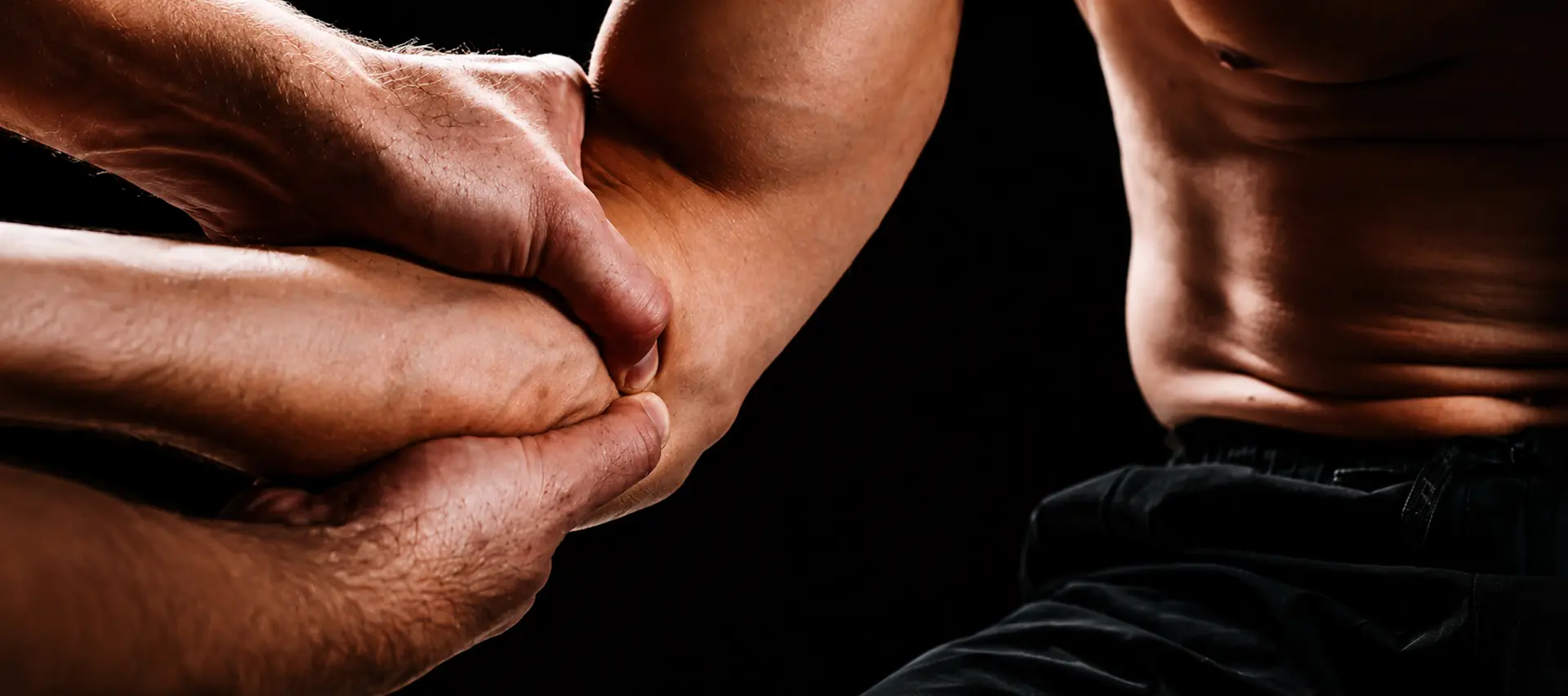
Recover between matches and get back on court with less soreness.
Licensed therapists · Midtown East · Open 7 days · Sessions from $169
Pickleball loads the same tissues every match: the paddle-side shoulder, the forearm and elbow, the hips, and the calves that drive every split step at the kitchen line. Our sports massage for pickleball players is built around those demands. It is clinical, sport-specific soft tissue work that helps reduce soreness, restore range of motion, and lower injury risk, so you get back on court sooner.
This is not a spa massage. Spa massage works the surface for an hour. Sports massage works the tissue, the fascia, and the imbalance underneath the symptom, so the result holds after you leave the room.
Why Sports Massage Is Essential for Pickleball Players
Pickleball is one of the fastest-growing sports in the United States. It draws players of every age, especially those over 50. The game looks gentle. It is not. Fast hands at the net, sudden direction changes, and hundreds of repetitive paddle swings per session load the same muscles again and again.
That repetition builds skill. It also builds tightness, knots, and imbalances that show up as a sore shoulder, a cranky elbow, or tight calves. In NYC, many of the players we see sit at a desk all day and then play hard at night and on weekends. That combination is where most overuse problems start. Whether you are dealing with fatigue after a long session or want better mobility before your next match, our pickleball massage therapy in NYC keeps you in playing condition.
Is Pickleball Sports Massage Right for You?
It is a strong fit if you:
- Play two or more times a week and feel soreness that lasts longer than 48 hours
- Have shoulder, elbow, forearm, or wrist tightness that flares after long sessions
- Are preparing for a league season or tournament and want recovery built around your schedule
- Are over 50 and want to keep playing consistently with less stiffness
- Sit at a desk all day and play hard at night or on weekends
It is not the right first step if you have a sudden injury with swelling, bruising, numbness, or pain that stops you from bearing weight or lifting your arm. See a physician first. Once you are cleared, we can build massage into your recovery plan.
Key Benefits of Sports Massage Therapy for Pickleball Players
Boost Endurance, Recovery, and Performance
Sports massage is a performance tool. Before a match or after one, targeted work helps you move better and recover faster. Here is what it can do for your game:
- Reduce muscle soreness: Releases the knots and trigger points that build up from repetitive swings, which stretching alone often misses.
- Enhance flexibility and range of motion: Loosens tight muscle and connective tissue through the shoulders, hips, and ankles for smoother swings and quicker first steps.
- Reduce injury risk: Addresses the muscle imbalances behind common pickleball problems like rotator cuff strain, pickleball elbow, and Achilles tightness.
- Accelerate recovery: Improves circulation to fatigued muscles so you can bounce back between matches and training days.
- Improve mobility and balance: Better joint mobility supports stable footwork and can lower the risk of falls on court.
- Sharpen mental focus: Less physical tension and lower stress help you stay composed in tight games.
Most players notice less soreness and freer movement after the first session. Lasting change typically comes from a short series of sessions built around your playing schedule.

Muscles Used in Pickleball and How Sports Massage Supports Them
Primary Muscle Groups Engaged in Pickleball
Pickleball is a full-body workout that challenges multiple muscle groups, requiring explosive movements, quick reflexes, and stability. Our skilled massage therapists target these muscle groups to promote recovery, improve flexibility, and maintain peak performance.
The lower body plays a critical role in powering movements like lunges, jumps, and rapid directional changes. Quadriceps and hamstrings provide the force needed for sudden bursts of energy, while glutes and calves stabilize movements and support lateral shuffles.
Upper-body muscles are equally important. Shoulders and rotator cuff muscles control paddle swings and overhead shots, while forearms and wrists support grip strength and paddle control. Core muscles provide rotational power and balance during fast-paced volleys.
How Sports Massage Supports Muscle Health
Sports massage works to restore muscle function by addressing areas of tightness and fatigue. Through targeted pressure and stretching techniques, massage can release muscle adhesions that limit flexibility, improve circulation, and restore mobility.
Common Pickleball Injuries and How Massage Helps
The fast pace and repetitive motion of pickleball make players prone to overuse injuries and muscle strains. Lunging for a dink or swinging overhead puts repeated stress on the same joints. Sports massage addresses these problem areas directly. It releases tension, improves mobility, and restores balance to help reduce pain and support recovery.
Top Pickleball Injuries We Work On
- Rotator cuff strain: Repetitive swinging overloads the small shoulder stabilizers. Massage helps restore mobility and reduce tension in the surrounding tissue. Learn more about our shoulder massage therapy in NYC.
- Pickleball elbow (lateral epicondylitis): Frequent paddle swings overload the forearm muscles that attach at the outer elbow. Targeted massage improves circulation and reduces forearm tightness.
- Knee pain and sprains: Abrupt direction changes strain the knees. Massage on the quadriceps, hamstrings, and inner thighs helps reduce the load reaching the joint.
- Calf strain and Achilles tightness: Split steps and short sprints load the calves and Achilles tendon. Regular calf work helps keep the lower leg supple and reduces strain risk.

Reducing Wrist and Hand Injury Risk in Pickleball
Repetitive gripping and swinging can lead to wrist strain and inflammation. Regular massage relieves forearm and wrist tightness and improves joint mobility, which helps reduce the risk of injury.
Massage supports clinical care. It does not replace it. If you have a suspected tear, sprain, or fracture, get evaluated by a physician first. We work alongside your doctor or physical therapist once you are cleared.
What to Expect in Your Pickleball Sports Massage Session
Assessment comes first in every session. Your therapist asks how often you play, which side you swing on, where you feel it, and when it flares. We check range of motion through the shoulder, forearm, hips, and ankles. Then we build the session around what we find.
From there, we combine deep tissue work, myofascial release, trigger point therapy, and stretching. When it adds value, your therapist may add cupping therapy or assisted stretching. Adam Cardona LMT also applies instrument-assisted soft tissue mobilization (IASTM) within his treatments when it would improve results, which often helps with stubborn forearm and elbow tissue.
Sessions run 60, 90, or 120 minutes. A 60-minute session suits one focused area, like the paddle-arm shoulder and forearm. A 90-minute session covers the full chain from calves to shoulders. A 120-minute session fits tournament recovery or multiple problem areas. Sessions start at $169. See our sports massage pricing in NYC.
Pre-Game and Post-Match Massage for Pickleball Players
Is It Good to Get a Massage Before a Pickleball Match?
Yes. Pre-game massage can be useful when performed appropriately before a match. Short, focused sessions can prepare muscles by stimulating the nervous system, increasing blood flow, and improving range of motion without over-relaxing the muscles.
Massage After Pickleball: Accelerate Recovery
Post-match recovery massage soothes sore muscles, reduces stiffness, and supports recovery. Targeted work can address overused muscles, muscle knots, and trigger points to help players feel refreshed for their next match.

Why Choose Elite Healers Sports Massage for Pickleball Therapy in NYC?
Elite Healers Sports Massage is a clinical sports massage practice. We build every session around your sport, not a generic routine. Our licensed sports massage therapists work with pickleball, tennis, and racquet sport players at every level. If you also play tennis, see our massage therapy for tennis players.
We have over 200 reviews at a 4.9 star average. Our work has been featured in Forbes, Muscle and Fitness, Runner's World, Newsweek, and Peloton. Our Midtown East sports massage studio is open 7 days a week. Explore all of our sports massage therapy services in NYC.
How to Schedule Your Pickleball Massage in NYC
Pick your session length, choose your therapist, and select a time that fits your playing schedule. We are open 7 days a week at 120 East 56th Street, Suite 420, New York, NY 10022. Prefer to talk first? Call 929-327-8126.
Frequently Asked Questions About Pickleball Massage Therapy
Do I need to be a competitive player to benefit from sports massage for pickleball?
No. Sports massage helps recreational and competitive players alike. If you play regularly, it can reduce muscle soreness, lower injury risk, and speed recovery between sessions.
How do I know if I need a sports massage for pickleball?
Common signs include soreness that lasts longer than 48 hours, a paddle-arm shoulder or elbow that stiffens after play, tight calves during split steps, or reduced reach on overhead shots. If any of these show up week after week, targeted work on those muscles can help.
How often should I get a sports massage for pickleball?
It depends on how often and how hard you play. Most recreational players do well with a session about once every 4 weeks. During league season or tournament prep, once a week keeps recovery ahead of the load. If an imbalance or flare-up appears, once or twice a week for a few weeks can reset it before you return to maintenance. For the full framework, read our guide on how often you should get a massage.
Can massage help pickleball elbow?
Massage can ease the forearm tension that loads the outer elbow. Targeted work on the forearm, wrist extensors, and upper arm often reduces pain and improves grip comfort. Pickleball elbow typically responds best to a short series of sessions paired with activity changes and guidance from your doctor or physical therapist.
Should I get a massage before or after a pickleball tournament?
Both have a place. Book deeper work at least 72 hours before the tournament and keep anything closer to match day light. After the tournament, schedule a recovery session the same day or within two days.
Can I play pickleball the day after a sports massage?
Usually, yes. Some soreness for 24 to 48 hours after deeper work is normal. Hydrate, move gently, and ease into play. If you have a big match coming up, tell your therapist so the pressure fits your schedule.
Is sports massage safe for senior pickleball players?
Yes, for most players. Our therapists adjust pressure and technique to your age, tissue, and training history. If you have osteoporosis, a recent surgery, a blood clotting condition, or another medical condition, get clearance from your physician before booking.
What should I expect at my first pickleball sports massage?
Your first session starts with a short assessment of how you play, where you feel tension, and how you move. Your therapist then works the areas driving your symptoms, usually the shoulder, forearm, hips, and calves, and finishes with recommendations for stretching and your next session.